
Singapore in winter, from December to February, is warm and wet rather than cold. Daytime highs stay around 30°C to 31°C, nights sit near 24°C, and humidity stays above 80%. December is the wettest month of the year with about 330 mm of rain, while February is one of the driest at about 105 mm.
That rain pattern matters more than the heat when you plan a winter trip. A December itinerary needs an indoor backup for most afternoons. In February you can plan outdoor days with a lot more confidence. Prices move as well: December costs the most, January is usually the cheapest, and February depends on when Chinese New Year falls.
What you get in exchange for the rain is the festive season. Orchard Road’s Christmas lights, the New Year’s Eve fireworks at Marina Bay, Pongal in Little India and Chinese New Year in Chinatown all happen between late November and February.
Summary

Singapore stays warm all winter. Expect 30°C to 31°C in the day and about 24°C at night.
December brings long rainy spells. February is drier and windier, and it’s the easiest month for outdoor plans.
December is the busiest and most expensive month. January is usually the cheapest.
Chinese New Year 2027 falls on 6 February. Some small shops and hawker stalls close for the first couple of days.
Pack summer clothes, a light layer for air-conditioned spaces and an umbrella you’ll actually carry.
Singapore’s drug laws are extremely strict. Read the section on local rules before you fly.
What Is Winter Like in Singapore?
Winter in Singapore is the Northeast Monsoon season, which runs from December to early March. The country sits just over one degree north of the equator, so it has no real seasons. It has two monsoons, with calmer transition months in between.
Wet phase and dry phase
The two halves of the monsoon feel very different.
From December to early January, cold air pushing down from mainland Asia meets the warm air near the equator. Weather forecasters call these monsoon surges, and they bring grey skies and steady rain that can last for hours, sometimes most of a day. Temperatures can dip to around 23°C during these spells, which is about as cool as Singapore gets.
From late January into February, the rain band moves south towards Java. Singapore gets windier and much drier, with more sunny days. This is the stretch to save your outdoor plans for.
Winter weather by the numbers
These are long-term averages from Changi weather station.
December | January | February | |
Average daytime high | 30.5°C | 30.6°C | 31.5°C |
Average night low | 24.3°C | 24.3°C | 24.6°C |
Average rainfall | 331.9 mm | 221.6 mm | 105.1 mm |
Average rainy days | 19 | 13 | 9 |
Relative humidity | 85.5% | 83.5% | 81.2% |
December gets more than three times the rain of February, and nearly twice as many rainy days.
Which Winter Month Is Best for Your Budget?
January is usually the cheapest winter month in Singapore and December the most expensive, with February somewhere in between. The budget ranges below are rough estimates for two people over four nights. Your hotel and how often you eat out will move the number most, so treat these as a starting point.
If you’d rather not book flights, hotels and transfers one by one, Singapore tour packages can save you time, and during the December rush they sometimes work out cheaper than booking each piece yourself. Couples comparing Singapore honeymoon packages should look closely at February for the drier weather, but check the dates against Chinese New Year, when hotel rates go up.
December: festive, busy and expensive
Singapore in December is the busiest it gets all winter. School holidays in many countries line up with Christmas and New Year’s Eve, so flights and hotels fill up early. A four-night trip for two can run around SGD 1,420 to 2,520 (roughly ₹1.07 to 1.89 lakh).
If you’re set on December, book your flights and hotel at least eight weeks ahead. Prices tend to climb by 20% to 30% as the holidays get closer, and the best-located hotels near Orchard Road and Marina Bay go first.
January: the quieter, cheaper month
After New Year’s, things calm down. Fares drop and hotels start running deals. Expect around SGD 1,240 to 2,220 (roughly ₹93,000 to ₹1.67 lakh) for the same trip.
Chinatown starts putting up its Chinese New Year decorations in January, and the festive street market opens, so you get a taste of the celebrations before the crowds arrive.
February: Chinese New Year and the best weather
Singapore in February has the driest weather of the three winter months. Crowds are moderate, except around Chinese New Year. A four-night trip costs around SGD 1,300 to 2,340 (roughly ₹97,500 to ₹1.76 lakh).
In 2027, Chinese New Year falls on Saturday 6 February, with public holidays running through Monday 8 February. On the first two days, many family-run shops and hawker stalls shut. Malls, big restaurants and major attractions stay open, so you won’t go hungry, but don’t plan your hawker food crawl for those days.
Where to Go in Singapore in Winter
The best places to visit in Singapore on rainy days are Gardens by the Bay’s domes, Jewel Changi Airport, the city’s museums and the underground mall links on Orchard Road. When the sky clears, especially in February, head for the Southern Ridges, Pulau Ubin or Sentosa.
When it’s raining
Gardens by the Bay’s Flower Dome and Cloud Forest are cooled glasshouses, a lot more pleasant than the sticky air outside. You walk into the Cloud Forest straight past an indoor waterfall about 35 metres tall. A ticket for both domes costs SGD 46 for non-resident adults.
Jewel Changi Airport is worth a visit even if you aren’t flying that day. The HSBC Rain Vortex, a 40-metre indoor waterfall, pours down through the middle of a terraced garden, and you don’t pay anything to see it. If you can, plan your arrival or departure day around it.
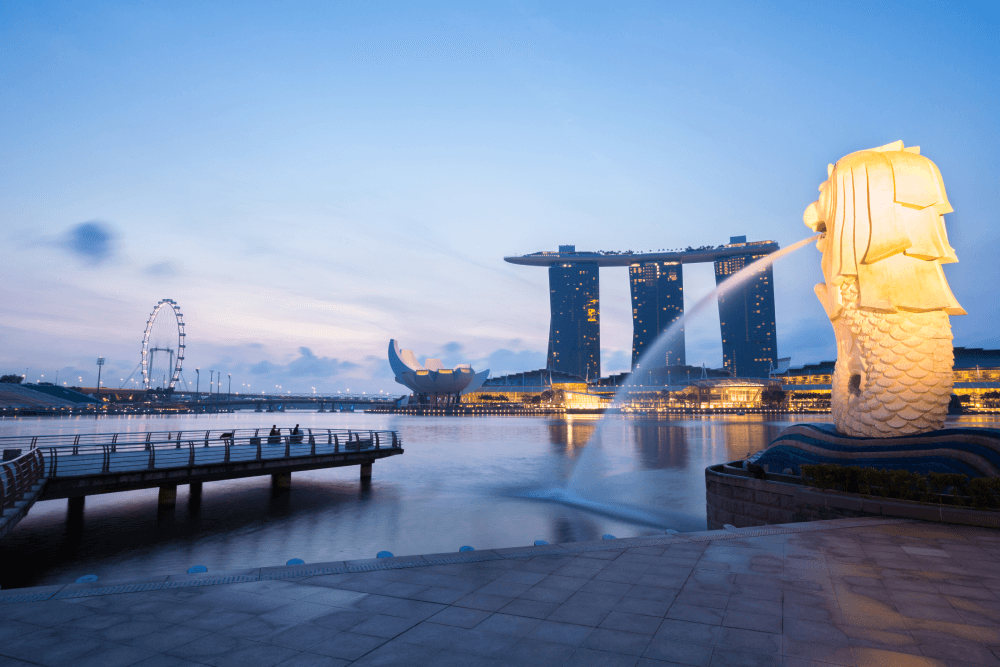
The ArtScience Museum is the lotus-shaped building next to Marina Bay Sands. Its permanent exhibition, Future World, has rooms where the projections react when you touch the walls or draw something and scan it in. Children tend to stay much longer than planned.
National Gallery Singapore and the National Museum of Singapore can fill a long rainy afternoon. The Gallery holds the largest public collection of modern Southeast Asian art, and the Museum covers about 700 years of Singapore’s history. Check their websites for current ticket prices and late opening nights.
Orchard Road and Bugis both have underground walkways between their malls. Around Orchard, you can get from ION Orchard to Wisma Atria and Ngee Ann City without stepping into the rain. Bugis Junction connects to its MRT station the same way.
When the sky clears
The Southern Ridges is a 10-kilometre trail linking Mount Faber Park, Telok Blangah Hill Park and Kent Ridge Park. The best-known stretch is Henderson Waves, a curving wooden bridge 36 metres above the road. Start around 7:30 AM, before it heats up.
Pulau Ubin is a small island about 15 minutes by bumboat from Changi Point Ferry Terminal. It looks a lot like Singapore did in the 1960s, with kampong houses and mangroves along quiet roads. Rent a bicycle near the jetty and ride to Chek Jawa Wetlands.
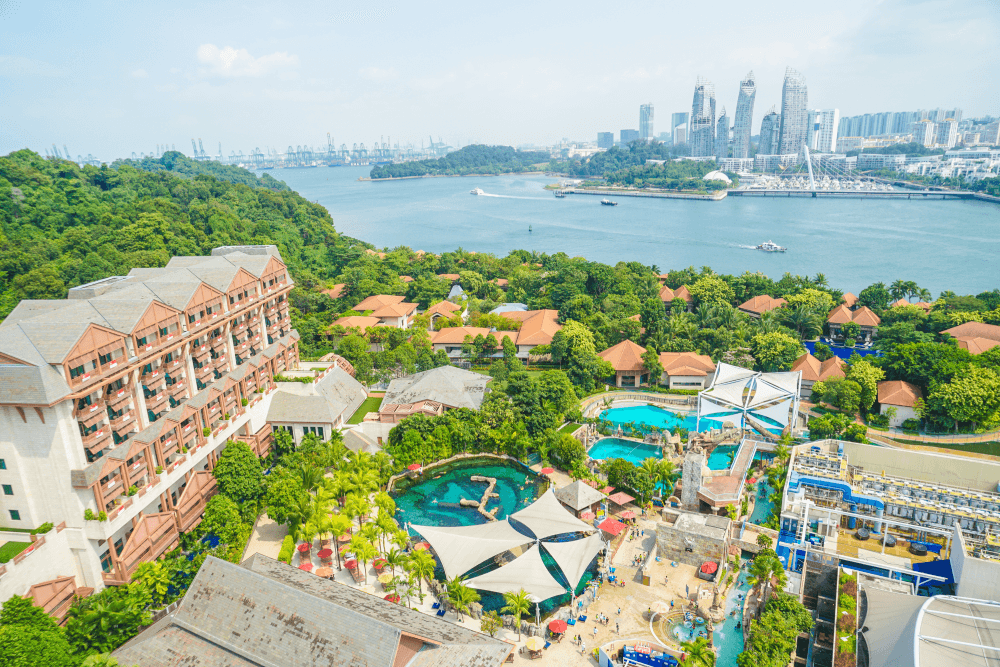
Sentosa has the beaches, the cable car and Universal Studios Singapore. In December and January, go in the morning, since the heavier rain usually arrives later in the day.
What Festivals Happen in Singapore in Winter?
Festivals are some of the best things to do in Singapore in winter. December has Christmas on Orchard Road and the New Year’s Eve countdown. Pongal comes in mid-January, and both Thaipusam and Chinese New Year fall in late January or February.
December
Christmas on A Great Street is the yearly light-up along Orchard Road, usually from mid-November to late December. There are Christmas markets along the street, and some malls run artificial snowfall in the evenings.
The Marina Bay countdown on New Year’s Eve ends with fireworks over the bay. The crowds are huge. Find your spot early in the evening, and be ready to walk a long way after midnight because nearby MRT stations get packed.
January and February
Pongal is the Tamil harvest festival, held in mid-January. Little India gets a street light-up, and stalls sell sugarcane and clay pots for cooking the sweet rice dish the festival is named after.
Thaipusam falls in late January or early February. Devotees walk from the Sri Srinivasa Perumal Temple on Serangoon Road to the Sri Thendayuthapani Temple on Tank Road, many carrying elaborate kavadi structures. It’s a religious procession, so watch quietly from the side and give people room.
Chinese New Year fills Chinatown with red lanterns, lion dances and a busy street market. River Hongbao, a large lantern festival with food stalls and performances, usually runs around the same time. Check the dates and venue for the year you travel, since it has moved locations over the years.
Planning Your Winter Trip
Singapore in winter is warm the whole way through, wet in December and much drier by February. December is for the Christmas lights and New Year’s Eve, as long as you book early. January suits you if keeping costs down matters most. February has the best weather for outdoor days, though you’ll want to plan around the Chinese New Year closures.
Whichever month you pick, keep an indoor option ready for each afternoon and do your outdoor sightseeing in the morning.
FAQs
Is Singapore cold in winter?
No. Days are around 30°C to 31°C and nights rarely drop below 24°C. During heavy rain it can fall to about 23°C, which feels cool here but nowhere near cold.
Does it rain every day in winter?
Not every day, but often. December averages about 19 rainy days, and some of that rain lasts for hours. February averages about 9 rainy days and is much drier.
When is the best time to visit Singapore in winter?
It depends on what you want. February has the best weather for outdoor sightseeing. December has the festive lights and New Year’s Eve. January usually has the lowest prices.
Are things closed during Chinese New Year?
Some are. Many smaller shops and hawker stalls close for the first two days. Malls, major attractions and most restaurants stay open.
Do I need a jacket?
Not for outdoors. A light layer for air-conditioned trains, malls and museums is enough.
Planning this trip?
Tell us what you have in mind and a Many2Go consultant will get back to you with a tailored plan for Singapore.