
The Maldives is made up of around 1,190 islands spread across 26 atolls, and that's the first thing we explain to anyone planning a trip with us. The island you stay on decides what you can do each day. Whale sharks are in one atoll, manta rays gather in another, the glowing beach is on a single small island, and the best surf is near the capital.
So when travellers ask us what they should do in the Maldives, our answer usually starts with another question: what do you most want to see? A resort in Noonu Atoll and a guesthouse in South Ari will give you two very different trips, at two very different prices.
We've put this guide together to help you sort that out before you book. It covers the wildlife trips worth planning around, the resort experiences our guests talk about most, what to eat on a local island, where to surf, and the local rules that catch first-time visitors off guard. We've included prices in both US dollars and Indian rupees wherever we can. Rupee amounts are approximate, converted at around ₹96 to US$1, so check the current rate when you budget.
Quick Summary
If you're short on time, here's what we'd focus on.
For wildlife, plan around three places: South Ari Atoll for whale sharks (any month), Hanifaru Bay in Baa Atoll for manta rays (May to November), and Vaadhoo Island for the glowing beach (December to April, near the new moon). For a splurge, look at the slide villas at Soneva Jani or lunch at the 5.8 Undersea Restaurant. On a budget, stay on a local island like Maafushi or Dhigurah, where guesthouses start around $50 (about ₹4,800) a night and tours cost roughly half of what resorts charge.
A few things we always remind travellers about before they book:
Public ferries don't run on Fridays
Alcohol isn't served on local islands or in Malé
On local islands, swimwear is only allowed on designated bikini beaches
Marine Wildlife Encounters
Swimming with Whale Sharks in South Ari Atoll
South Ari Marine Park, known locally as SAMPA, is one of the few places in the world where you can find whale sharks all year. They're usually spotted near the outer reef around Dhigurah, Maamigili and Dhangethi.
The numbers back this up. The Maldives Whale Shark Research Programme has recorded more than 8,000 encounters in South Ari over the last ten years and identified 527 individual sharks off Dhigurah. Most of them are young males that stay in the area for long periods, which is why sightings are so consistent.
A trip booked from a local island costs about $75 to $100 (roughly ₹7,200 to ₹9,600). The same trip through a resort is usually $200 to $350 or more (about ₹19,200 to ₹33,600). Boats go out most mornings, and guides brief you beforehand on keeping your distance, since touching or chasing the sharks isn't allowed. If whale sharks are the main reason for your trip, we generally recommend staying in South Ari for at least three nights so you have more than one chance to go out.
Snorkeling with Manta Rays at Hanifaru Bay
Hanifaru Bay is a small, shallow bay in Baa Atoll, which UNESCO recognises as a Biosphere Reserve. During the southwest monsoon, currents push plankton into the bay and manta rays follow it in to feed. On a good day you can see dozens of them circling in the water at once.
The season runs from May to November, and the chances of seeing mantas during that window are around 70%. You can visit from local islands such as Dharavandhoo, Maalhos and Eydhafushi, or from one of the resorts in Baa Atoll. Access to the bay is controlled, so trips have to go through a licensed operator and run on fixed time slots. This is one we suggest booking early in peak months.
Seeing the Glowing Beach on Vaadhoo Island
On some nights, the waves on Vaadhoo Island light up blue as they break on the shore. If you walk on the wet sand, your footprints glow for a second too. It's caused by a type of plankton called Noctiluca scintillans, which gives off light when the water around it is disturbed.
The best chance of seeing it is during the dry season, December to April, on nights close to the new moon. Go down to the beach one to three hours after sunset, when it's fully dark. Unlike many places where you'd need to pay for a boat tour to see bioluminescence, here you can simply walk out onto the beach for free. It's never guaranteed, so we usually tell travellers to treat it as a bonus rather than the centrepiece of their trip.
Reefs and Coral Conservation
House Reefs and Snorkel Spots
Plenty of islands have a coral reef right off the beach, called a house reef. At these places you can swim out from the shore or climb down your villa's ladder and see turtles, eagle rays and small reef sharks within a few minutes.
Some well-known spots:
HP Reef in North Malé Atoll, also called Rainbow Reef because of its soft corals
Banana Reef, one of the first dive sites in the country to become popular
Baros and Banyan Tree Vabbinfaru, two resorts known for their house reefs
One tip we share with every snorkeler: in the dry season (December to April), the water is usually clearer on the western side of an atoll. In the wet season (May to November), the eastern side tends to be better. When snorkeling is high on a guest's list, we factor this in when choosing their island.
Coral Planting Programs
Several resorts run coral restoration programs that guests can join. A marine biologist takes you through the process: collecting broken pieces of living coral, tying them onto frames, and placing them back on the reef. Some resorts send you photo updates as your frame grows.
These are the better-known programs:
Four Seasons at Kuda Huraa and Landaa Giraavaru has worked with Reefscapers since 2001 and has planted more than 9,000 coral frames.
Soneva Fushi and Soneva Jani run one of the largest coral growing programs in the Indian Ocean.
JOALI Maldives uses a low-voltage electric current on its frames to help coral grow faster.
Diamonds Thudufushi uses hexagonal steel structures called reef stars to repair damaged parts of the seabed.
Families travelling with older kids often enjoy this one, since it's hands-on and they get to see the results.
Resort Experiences
Overwater Villas
If travellers want to spend on one thing, it's usually the villa. A few stand out for reasons beyond the view.
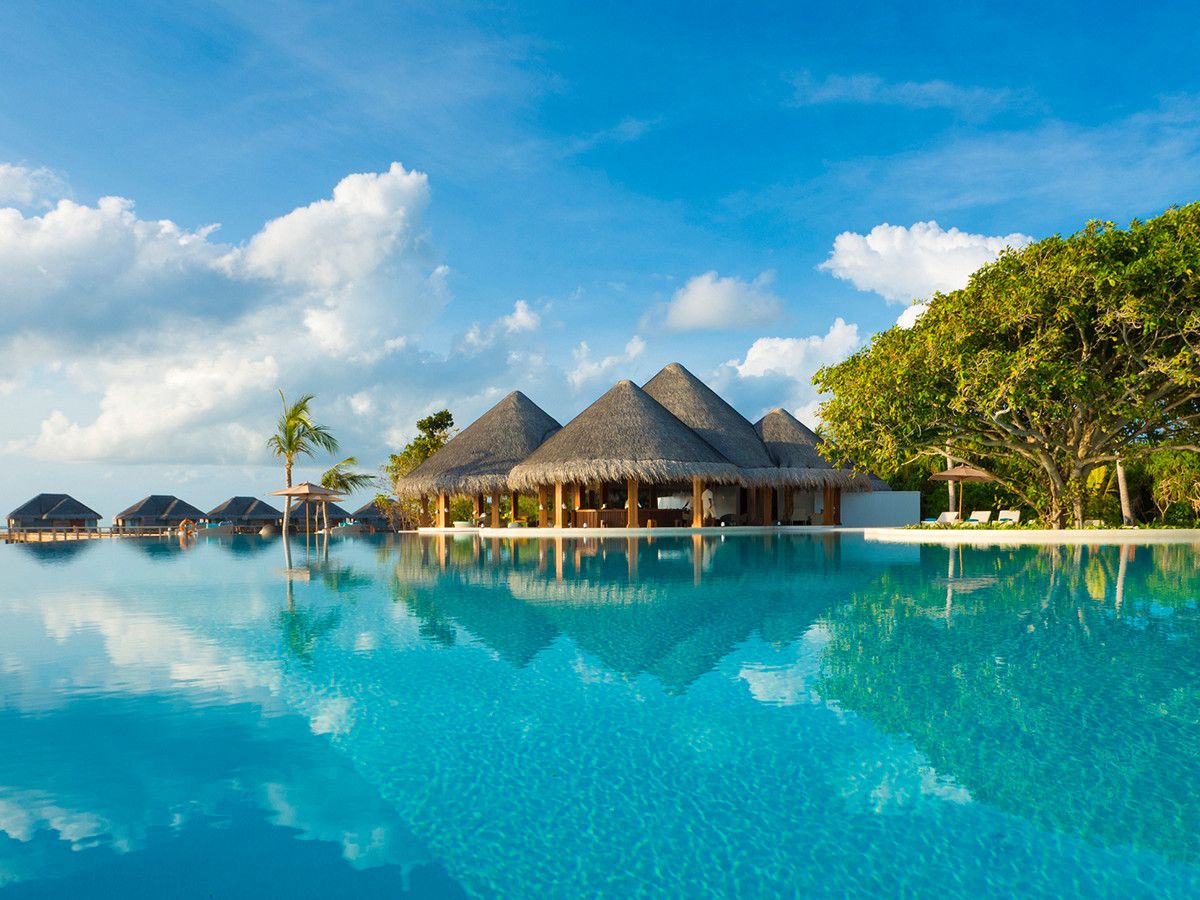
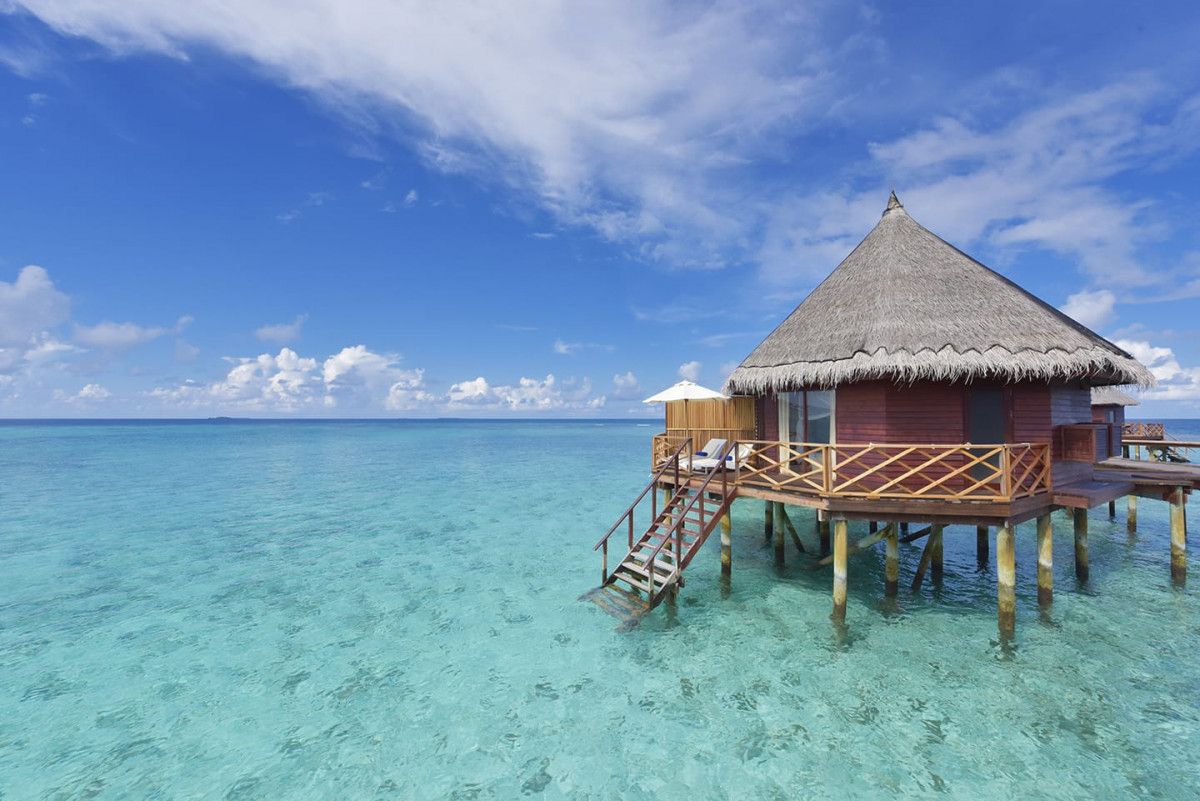
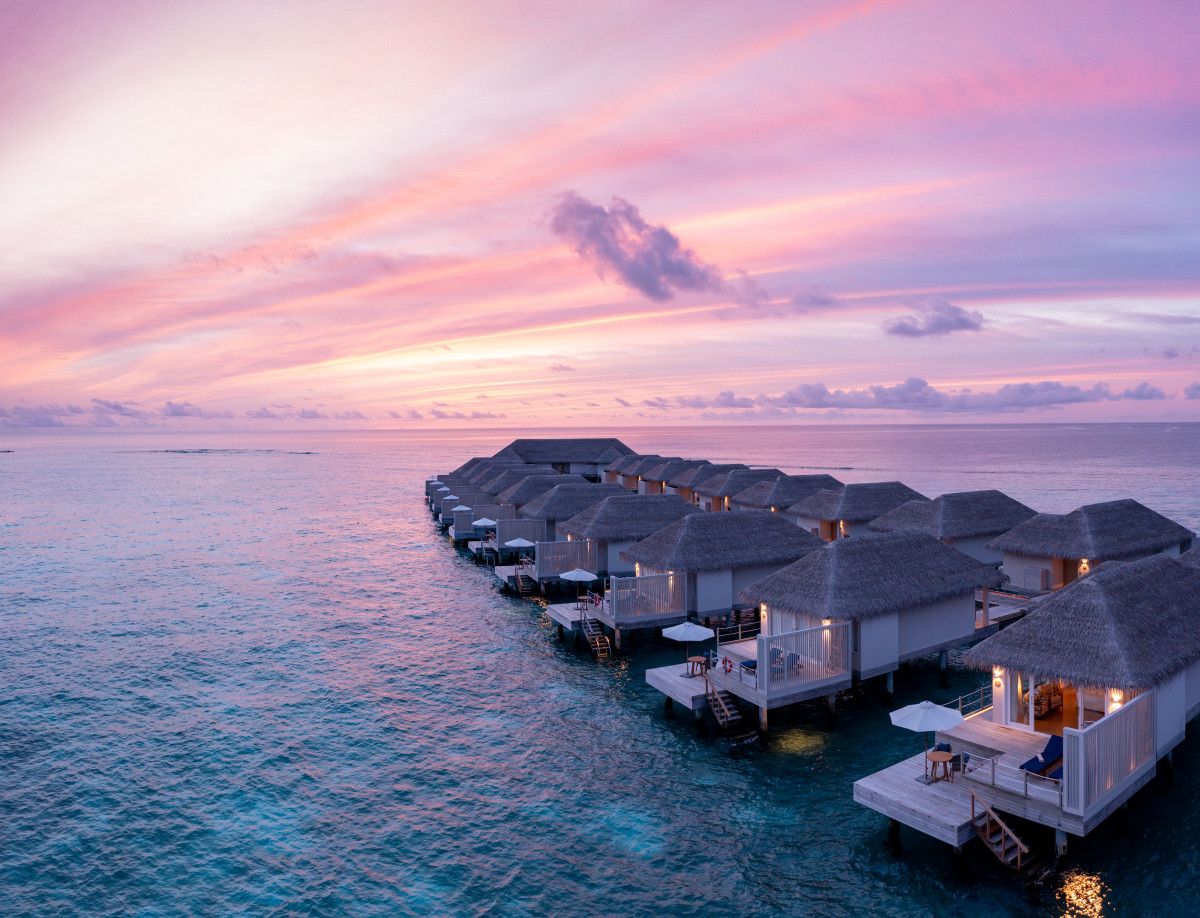
Soneva Jani in Noonu Atoll has water villas where the roof above the bed slides back so you can sleep under the stars, and a slide that drops you from the upper deck into the lagoon. Cheval Blanc Randheli, also in Noonu, has villas laid out more like apartments, with a separate living room and a large private pool. At Waldorf Astoria Ithaafushi in South Malé Atoll, the Reef Villas are built over live coral, so you can snorkel straight from your deck.
Dining Underwater at 5.8
The 5.8 Undersea Restaurant at Hurawalhi Island Resort in Lhaviyani Atoll sits 5.8 metres below the surface. You eat a set menu inside a glass room with reef fish swimming past on all sides. It's one of the most expensive meals in the country, and tables fill up fast, so we recommend reserving it at the same time as your stay.
Dolphin Cruises and Sandbank Picnics
Sunset dolphin cruises are offered almost everywhere. The boat heads out into a deep channel in the late afternoon, and spinner dolphins often swim and jump alongside it.
A sandbank picnic is another easy one to arrange. A speedboat drops you on a patch of white sand in the middle of the lagoon with lunch and some shade, and picks you up a few hours later. Couples on honeymoon ask us for this more than almost anything else, so we add it to nearly every Maldives honeymoon package we plan.
Local Islands, Culture and Food
Staying on a Local Island
Local guesthouses have changed how people travel in the Maldives. On inhabited islands like Maafushi, Dhigurah and Thulusdhoo, rooms cost roughly $50 to $150 a night (about ₹4,800 to ₹14,400), compared with several hundred dollars or more at a resort.
You also see a side of the country that resort guests rarely do. There are small shops, a mosque at the centre of the island, kids playing football in the evenings, and fishing boats coming in during the afternoon. Since dive centres and tour operators are based on these islands, activities are much cheaper too.
Maldivian Food
Most Maldivian dishes come back to three ingredients: tuna, coconut, and a starch such as rice, taro or roshi, a thin flatbread.
Dish | Main Ingredients | When It's Eaten | How It's Served |
Mas Huni | Shredded tuna, coconut, lime, chili | Breakfast | With roshi and sweet tea |
Garudhiya | Clear tuna broth, rice, lime, chili | Lunch | With rihaakuru, a thick fish paste |
Hedhikaa | Tuna, coconut, pastry | Afternoon tea | Gulha, bajiya, bis keemiya |
Kulhi Boakibaa | Smoked tuna, coconut, ginger, garlic | Festivals and weddings | A baked, spicy fish cake |
We always encourage travellers to try afternoon tea at least once. Around 4 PM, locals stop by small tea shops called sai hotaa for sweet black tea and a plate of hedhikaa, which are small fried and baked snacks like gulha (fish balls) and bajiya (a pastry similar to a samosa). It costs very little and you'll usually be sitting among locals rather than tourists.
Spending a Few Hours in Malé
Most travellers land in Malé and leave straight for their island, but we think the capital is worth four to six hours, especially if you have a late flight out. The whole island is only about two square kilometres, so it's easy to walk.
Places to include:
Malé Fish Market, where fishermen unload yellowfin tuna along the harbour
Hukuru Miskiy (Old Friday Mosque), built in the 1600s from carved coral stone and on UNESCO's tentative World Heritage list
Grand Friday Mosque, the largest mosque in the country, with a gold dome you can see from the water
Sultan Park and the National Museum, on the old palace grounds, with exhibits on the islands' history before and after the move from Buddhism to Islam
Surfing and Water Sports
Surfing in North Malé Atoll
Most of the well-known breaks are in North Malé (Kaafu) Atoll. The best known is Coke's, off Thulusdhoo, named after the Coca-Cola plant on the island. It's a strong, fast right-hander, so it's better suited to intermediate and experienced surfers.
Dhiffushi and Himmafushi are good alternatives if you want a cheaper base. Guesthouses there arrange boat trips out to the nearby breaks.
Lagoon Water Sports
The lagoons are calm and clear, which makes them good for parasailing, jet skiing, flyboarding, windsurfing and paddleboarding. Almost every resort offers these, and so do busier local islands like Maafushi.
Final Thoughts
When we plan a Maldives trip, we always start with what the traveller wants to see and work backward from there. If whale sharks are the priority, we look at South Ari. If it's mantas, Baa Atoll between May and November. If it's the glowing beach, Vaadhoo between December and April.
Once the area is settled, the choice between a resort and a local island mostly comes down to budget. Resorts give you privacy, house reefs and experiences like the 5.8 restaurant. Local islands give you cheaper tours, local food and a better sense of everyday life. Many of our guests split their trip and spend a few nights in each, which we find gives the best of both.
If you're comparing Maldives tour package and want help working out which atoll fits your dates and budget, our team is happy to put together a plan for you
Planning this trip?
Tell us what you have in mind and a Many2Go consultant will get back to you with a tailored plan for Maldives.