
Most people planning a Maldives trip start with the same question: when should I go? Most answers online stop at "December to April, it's sunny." That's correct, and it leaves a lot out.
The Maldives doesn't really have summer and winter. It has two monsoons. The northeast one brings glassy water and hardly any rain. The southwest one brings lower prices, emptier islands and, in Baa Atoll, manta rays feeding by the hundred. Pick the wrong month for what you want and you could pay peak rates for a trip that would have been better (and cheaper) in August.
So before you lock in a Maldives tour package, it helps to know what each month really offers. This guide breaks down the weather month by month and explains how it changes from the northern atolls to the southern ones.
Quick Summary: Which Months Should You Pick?
If you only read one section, read this one.
If you want... | Go in... | What to expect |
Sunshine, calm seas and the clearest water | December to April | Peak prices, villas often above ₹96,000 a night |
The lowest prices and empty beaches | May to October | Rates 30% to 60% lower, short afternoon showers |
Manta rays in huge numbers | June to October | Hanifaru Bay in Baa Atoll at its busiest |
A balance of good weather and fair prices | Late November, or March to April | Mostly dry, fewer crowds than Christmas |
The cheapest trip possible | May and June | Lowest resort rates and airfares of the year |
1. How the Maldives Weather Actually Works
Two monsoons run the year
The Maldivian calendar is split between two seasonal winds :
Iruvai (northeast monsoon): Roughly December to April. Dry air, low humidity, light winds and very little rain.
Hulhangu (southwest monsoon): Roughly May to October. Stronger westerly winds, more cloud and more rain.
The weeks in between, around April to May and October to November, are the transition periods when the winds switch direction.
"Rainy season" doesn't mean rain all day
Hear "monsoon" and you probably picture a week stuck in your villa while it pours. That rarely happens here.
Wet season rain usually arrives as a short, heavy squall, often in the afternoon, that lasts an hour or two and then clears. Even in the wettest months, you'll typically get 6 to 8 hours of sunshine a day. You may get the odd grey day, especially in May, but full washouts are the exception.
2. The Dry Season (Iruvai): December to April
Weather
This is the Maldives you see on postcards. Humidity drops, rain is minimal, and skies stay clear for most of the day. Expect around 8 to 9 hours of sunshine daily, with air temperatures sitting near 30°C and the sea staying warm enough to swim in for hours.
February and March are usually the driest months of the year in the central atolls around Malé.
Underwater visibility
Water clarity hits its yearly peak during these months, often reaching 25 to 40 metres. That makes a big difference if you're:
Snorkelling off the house reef
Taking underwater photos or videos
Learning to dive for the first time
Planning channel dives, where calm conditions make currents easier to manage
Prices and crowds
The catch is that everyone else wants this weather too. Dry season is peak season, and prices climb highest over Christmas, New Year and Chinese New Year. Room rates hit their annual highs, and luxury overwater villas regularly go past $1,000 a night, which is about ₹96,000. Flights from Indian cities also climb, and the best villas at popular resorts can sell out months ahead. If you're booking a Maldives honeymoon package for these months, it's worth reserving at least three to four months in advance.
Good for: honeymooners who want the "perfect" Maldives, first-time visitors, beginner divers and anyone whose dates are fixed around year-end holidays.
3. The Wet Season (Hulhangu): May to October
How the monsoon behaves
Rain picks up from May, along with stronger winds from the west. Rainfall has two noticeable peaks [Maldives Meteorological Service]:
May: around 216 to 238 mm for the month
September and October: around 243 to 245 mm
June to August sits between those peaks. You'll get showers and some breezy days, but plenty of sun as well.
Prices drop, and so do the crowds
Resort rates often fall by 30% to 60%. A villa that costs ₹90,000 a night in January might be listed closer to ₹40,000 to ₹60,000 in June. Airfares tend to drop too, and many resorts add free nights, meal plan upgrades or seaplane deals to fill rooms.
You notice it on the beach too. With fewer guests around, you can usually get a same-day spa slot and walk a whole stretch of sand without passing anyone.
Plankton brings the big animals
Divers and snorkellers give something up in these months. The southwest monsoon stirs up plankton, which cuts visibility down to around 10 to 25 metres. The water looks a little greener and less glassy.
But plankton is food, and food brings visitors. This is the season for manta rays and whale sharks feeding near the surface. The most famous spot is Hanifaru Bay in Baa Atoll, a UNESCO Biosphere Reserve, where more than 100 manta rays can gather at once during strong feeding events [Manta Trust]. It's snorkel-only, with a limited number of visitors allowed at a time, so book through your resort early.
Good for: budget-conscious travellers, couples who want privacy, families on school holidays, and anyone who'd trade a bit of water clarity for a manta encounter.
4. The Shoulder Seasons: March to April and Late November
If you want decent weather without paying Christmas prices, the shoulder months are worth a hard look.
March and April
These months sit at the tail end of the dry season. It's hot (April is often the warmest month of the year), sunshine is still high, and the sea is usually calm. Crowds start thinning after the Easter holidays, and some resorts begin easing their rates before May arrives. Around late April, you might notice the first signs of the wind shifting.
Late November
November is the transition into the dry season. By the second half of the month, conditions often look a lot like December, with drier days and calmer water. The prices don't. Rates usually stay moderate until the festive surcharges kick in around the third week of December.
If you're planning a trip from India, late November also tends to sit outside the major domestic holiday rush, which helps with flight prices too.
5. North vs Central vs South: Each Atoll Has Its Own Weather
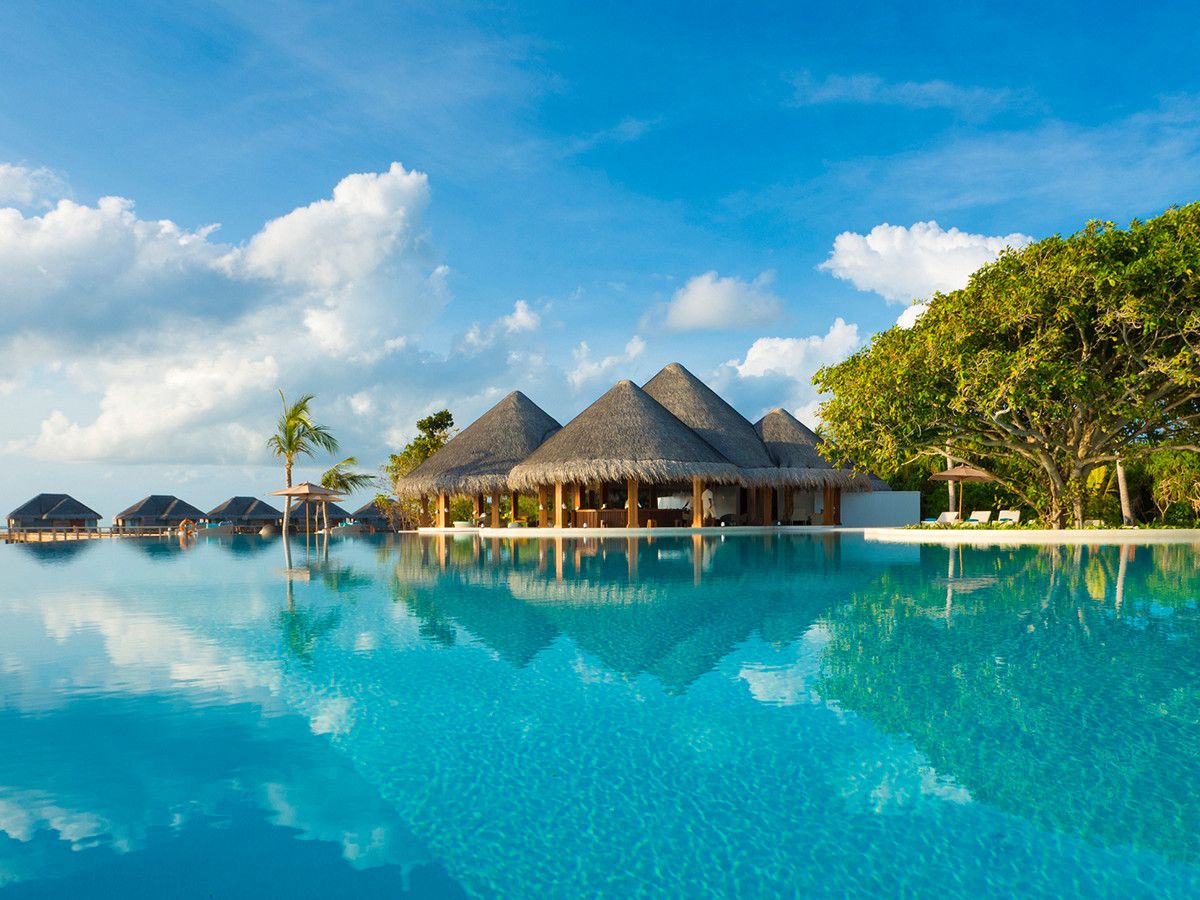
The Maldives stretches about 870 km from north to south, crossing the equator. That's long enough for weather to vary quite a bit depending on where your resort is. So when you shortlist places to visit in Maldives, check the atoll as well as the resort.
Northern atolls (around Hanimaadhoo)
The north has the strongest dry season in the country. From January to April, rainfall stays low at roughly 30 to 70 mm a month. The wet season hits harder here, with rainfall peaking around 260 mm in July.
So it's a strong pick for a winter trip and a weaker one in mid-monsoon.
Central atolls (around Malé)
This is where most resorts are, including those in North and South Malé Atoll and Ari Atoll. February and March are the driest months, at around 38 to 49 mm. October is usually the wettest, at about 245 mm.
The usual dry season and wet season advice fits best here.
Southern atolls (Addu and Gan)
Being so close to the equator, the south has a much weaker seasonal pattern. Oddly enough, January can be one of its wetter months, with over 200 mm of rain, while June tends to be drier than in the rest of the country.
If you're travelling mid-year, a southern resort gives you better odds of dry weather. In January, the north or central atolls are the safer bet.
6. Best Time by Activity
Most things to do in Maldives revolve around the water, and each activity has its own sweet spot in the calendar.
Scuba diving and snorkelling
December to April
Visibility up to around 40 metres
Calm lagoons, ideal for beginners and kids
Easier channel dives on the eastern side of the atolls
May to November
Manta ray feeding at Hanifaru Bay in Baa Atoll, usually busiest from June to October
More plankton means more big animals in general
Whale sharks are found year-round in South Ari Atoll, so you can plan that encounter in any month
Surfing and wind sports
Surf season runs roughly from April to October, when monsoon swells roll in and hit breaks around North Malé Atoll and the southern atolls. Kitesurfers also prefer the windier wet season months, when the westerlies are steady enough to ride.
If you're a beginner surfer, the edges of the season (April and October) tend to bring smaller, more manageable waves.
Bioluminescent beaches
The glowing blue shoreline you've probably seen in photos is caused by tiny phytoplankton that light up when disturbed. It's most common from July to October, during the wet season. Your best chance is on a dark night close to the new moon, away from resort lighting. It's never guaranteed, but ask the resort staff. They usually know which beaches have been glowing.
Conclusion
The right month comes down to what you care about most.
If you want the classic turquoise-water trip with almost no chance of rain, go between December and April and budget for peak prices. If you're happy with a few afternoon showers in exchange for paying much less and seeing manta rays by the dozen, May to October is hard to beat. And if you'd like a bit of both, aim for late November or March to April.
Whichever you pick, check which atoll your resort is in before you book. In July, a resort in Addu and one in the far north can have very different weeks.
Final verdict
Choose December to April for reliable sunshine, calm lagoons and the best visibility of the year.
Choose May to October for savings of 30% to 60%, manta ray season and quiet islands.
Choose late November or March to April for good weather at more reasonable rates.
Frequently Asked Questions
What is the cheapest month to visit the Maldives?
May and June usually have the lowest resort rates and airfares. This is the start of the wet season, so demand drops and resorts offer the biggest discounts.
Is it worth visiting the Maldives during monsoon season?
For many travellers, yes. Rain usually comes in short bursts, you still get 6 to 8 hours of sun a day, and prices can be 30% to 60% lower. It's also the best time to see manta rays. The main downside is reduced underwater visibility and a higher chance of the odd grey day.
When is the best time to see manta rays in the Maldives?
The wet season, roughly June to October, is best. Hanifaru Bay in Baa Atoll sees the largest gatherings, sometimes over 100 mantas at once during peak feeding.
Can I see whale sharks in any month?
Yes. Whale sharks are found in South Ari Atoll throughout the year, so you don't need to plan around a specific season.
What is the hottest month in the Maldives?
April is usually the hottest, with temperatures often above 31°C. Temperatures stay fairly steady all year, though, generally between 26°C and 32°C.
Planning this trip?
Tell us what you have in mind and a Many2Go consultant will get back to you with a tailored plan for Maldives.