You're scrolling through resort deals and one stops you. Overwater villa, private pool, five-star resort, less than half the usual price. The first thought is "book it." The second is "why is it so cheap? What am I missing?"
Check the dates. Chances are you're looking at the Maldives in July.
July is monsoon season there. That's why most people say the best time to visit Maldives is December to April, and if you want blue sky every single day, they're not wrong. What they don't mention is the bill. Conrad Maldives Rangali Island can cost around $1,492 (about ₹1,41,700) a night in January. In July, the same resort has gone for about $568 (about ₹54,000). Plenty of other big resorts drop their rates by 30% to 50% too.
So is the rain bad enough to cancel out the savings? For most people, no.
It does rain. But it usually comes as a heavy shower that's over in under an hour, often in the afternoon. The rest of the day you get sun, a sea that sits at 28°C, and resorts that are a lot quieter than in peak season.
A typical July week might look like this: two or three wet afternoons spent at the spa or the bar, and the mornings out on the water snorkelling with mantas or whale sharks.
If you're weighing up the same deal, this guide gives you the real numbers: what the weather is like day to day, which villa type holds up better in the rain, how much you can save, and which atolls are worth the trip this month.
The Quick Takeaway
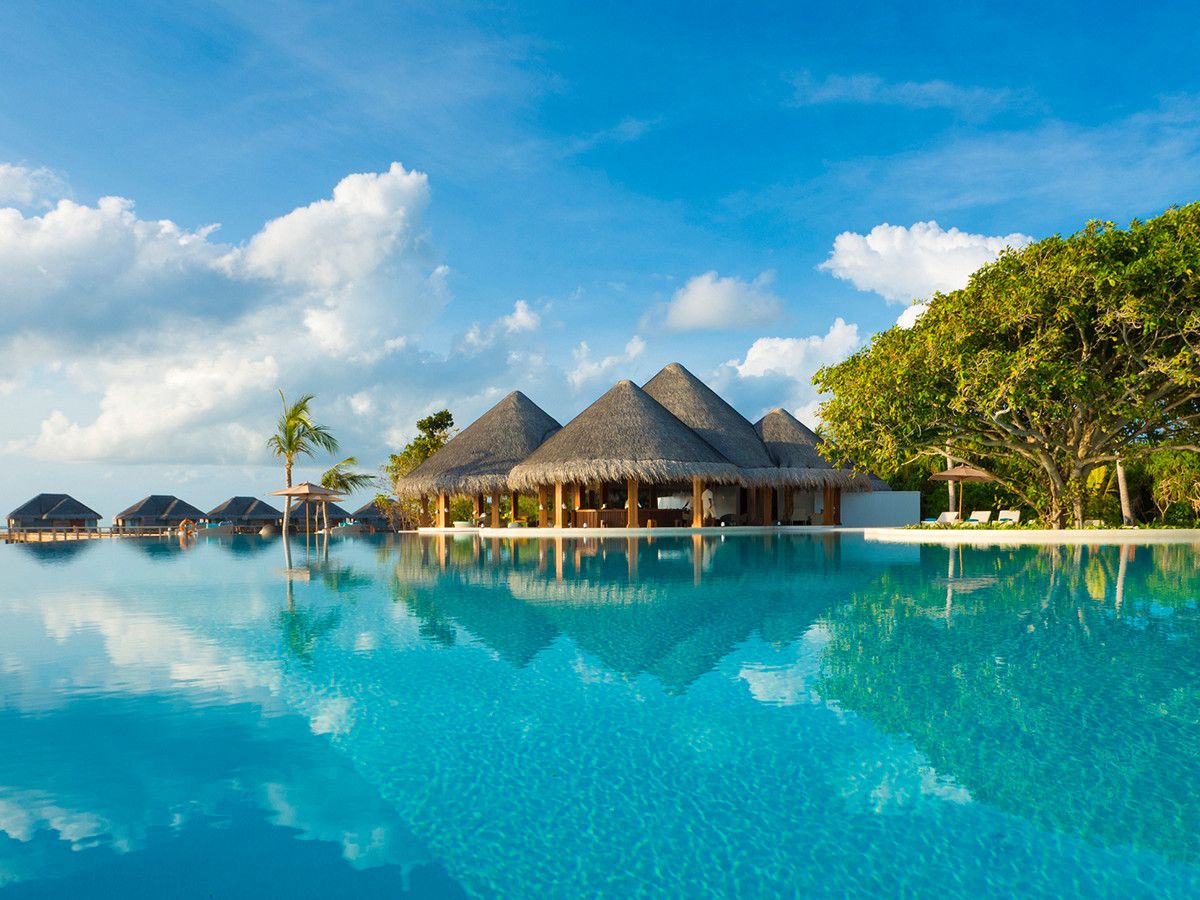
Short on time? Here's the gist.
Many top resorts cut room rates by 30% to 50% in July.
Most days get one to three showers of 30 to 90 minutes, usually in the afternoon or at night.
You'll still see 5 to 8 hours of sunshine on a typical day.
Manta rays gather in Baa Atoll from July, and whale sharks stay around South Ari Atoll all year.
Room rates don't include taxes. Expect 17% TGST, a 10% service charge and a $12 (about ₹1,140) per person, per night Green Tax on top.
Most things to do in Maldives, like snorkelling, boat trips and sandbank picnics, go better in the morning, when the water is calmer and rain is less likely.
Is July Right for You?
Go in July if you are:
A couple or family who wants a luxury resort without paying peak prices
A diver or snorkeller hoping to see mantas or whale sharks
A surfer chasing the most consistent waves of the year
Someone who's happy to shuffle plans around a passing shower
Skip July if you:
Need clear blue skies every single day (a wedding shoot, for example)
Get stressed when an excursion moves from 2 PM to 9 AM the next day
Get seasick easily and plan to spend lots of time on boats
What July Weather in the Maldives Is Really Like
Hear "monsoon" and you probably think of Mumbai in July, with rain that doesn't stop for days. The Maldives is different.
The Southwest Monsoon (Hulhangu)
Locals call the wet season Hulhangu. It runs from about May to October, when southwest winds bring moist air and bigger swells across the Indian Ocean. You get more cloud, more wind and more rain than in the dry months, though you won't spend the week stuck indoors.
How the Rain Actually Falls
July rain usually comes in short, heavy bursts. On a typical day you might get one to three showers, each lasting 30 to 90 minutes. They tend to arrive in the afternoon or overnight and clear quickly.
A dark band of cloud moves across the lagoon, it pours for a while, and then the sun comes back and the sand starts to steam. Some July days stay dry from start to finish.
Air and Sea Temperatures
Daytime air temperatures sit between 27°C and 31°C (80°F to 88°F), and the sea stays at 28°C to 29°C (82°F to 84°F).
That's warm enough to snorkel for an hour without a wetsuit. And since the air stays warm too, getting caught in a shower feels more like cooling off than getting cold.
July vs. January at a Glance
Metric | July (Green Season) | January (Peak Season) |
Daytime high | ~31°C (88°F) | ~29°C (84°F) |
Sea temperature | 28°C to 29°C (82°F to 84°F) | 28°C (82°F) |
Daily sunshine | 5 to 8 hours | 8 to 9 hours |
Rain pattern | 12 to 14 wet days (30 to 90 min squalls) | 3 to 5 wet days |
Overwater villa rates | 30% to 50% off | Full peak pricing |
You lose two or three hours of sunshine a day compared with January, and you can save half the room rate.
Overwater Villa or Beach Villa in July?
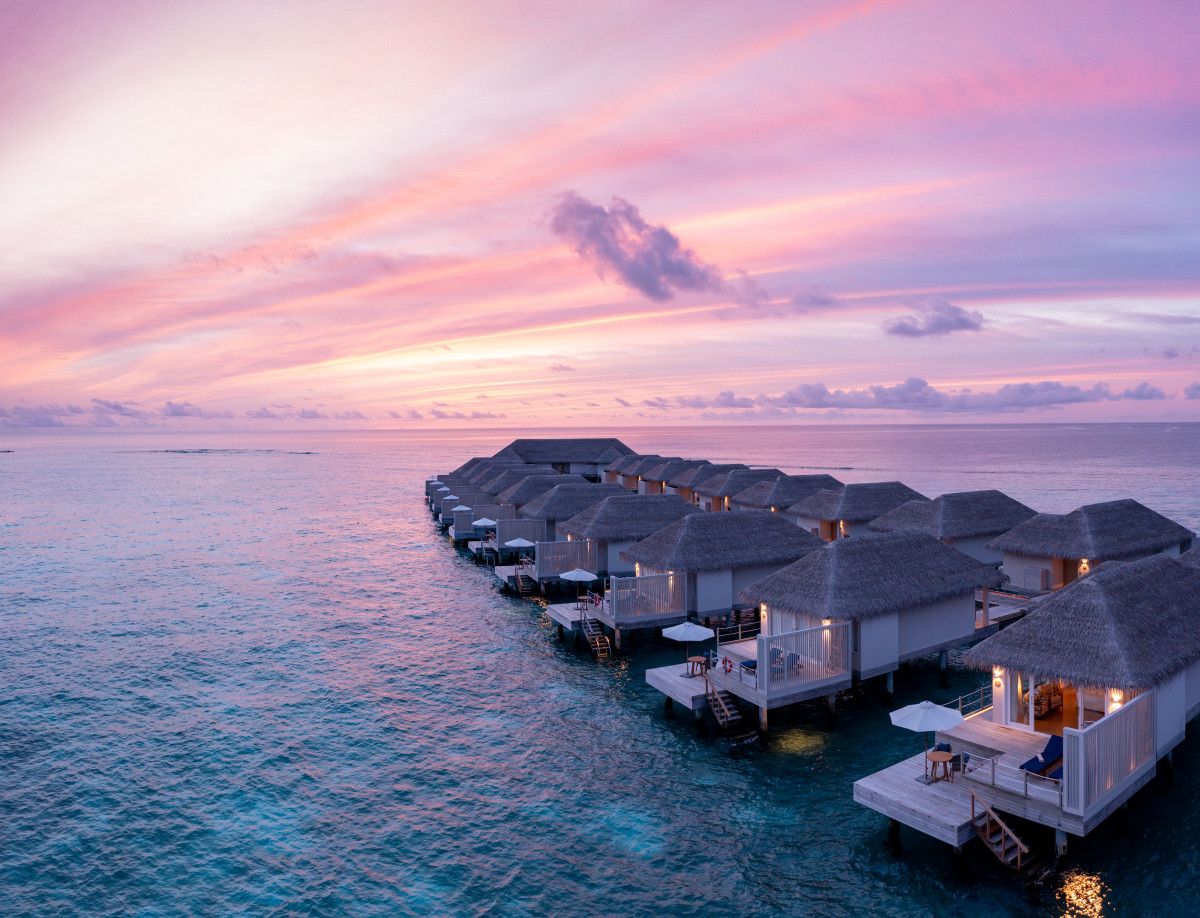
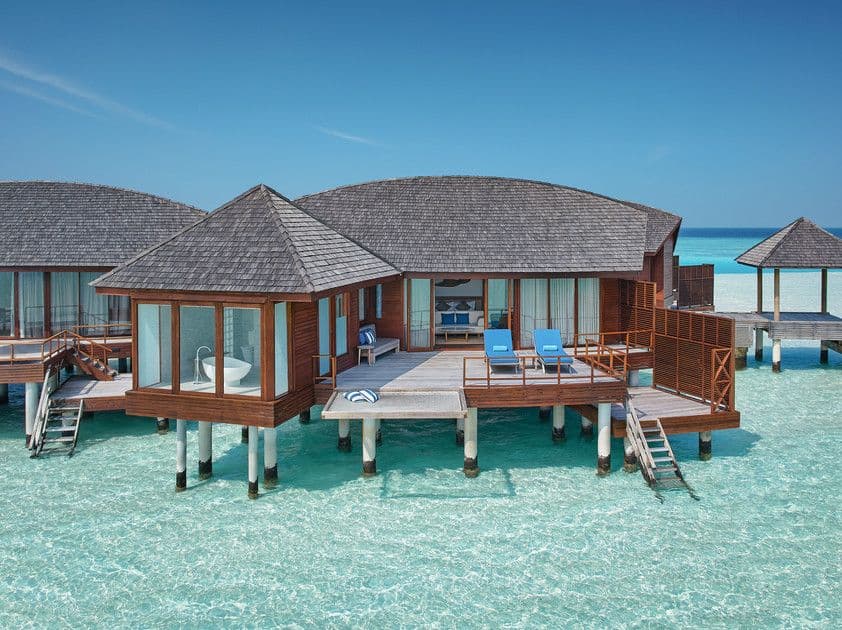
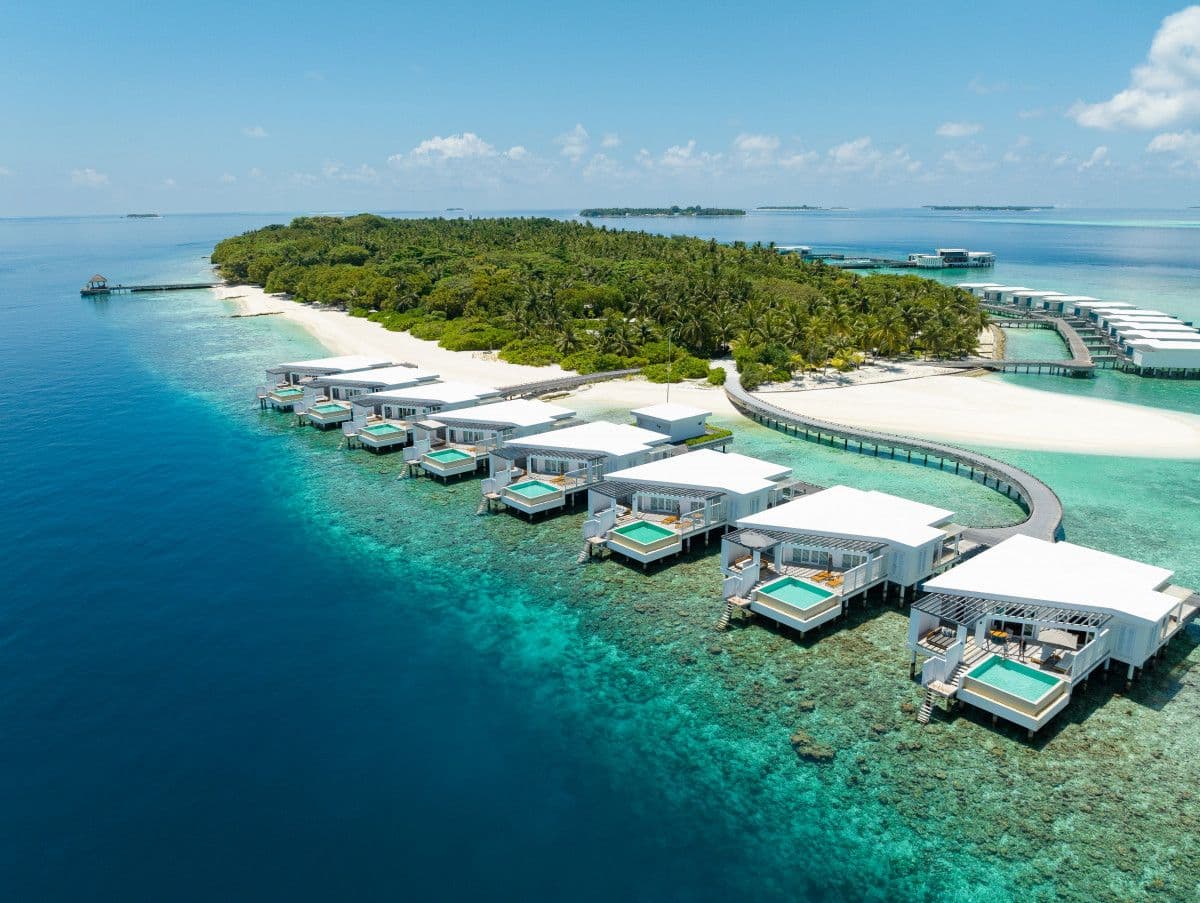
The overwater villa is what most people picture when they think of the Maldives. In July, though, a beach villa is often the better booking, and it's worth thinking about before you pay.
Overwater Villas in Wind and Rain
An overwater villa sits on stilts with open sea all around it. On a sunny day that's exactly why you booked it. When a squall comes through, a few things change.
The rain and wind on a thatched roof can get loud, especially at night. Some people find it relaxing, but light sleepers may not. Your deck and loungers get soaked and take a while to dry, and the ladder down to the lagoon turns slippery.
Squalls can also stir up currents under the villas for a short time. Check with the resort's water sports team before jumping off your deck that day.
You can still have a great stay in an overwater villa. Just go in knowing what a rainy afternoon looks like out there.
Why a Beach Villa Often Works Better
Palm trees and plants around a beach villa block a lot of the wind, so stormy afternoons feel calmer. Many beach villas also come with an open-air bathroom or garden shower, and standing out there in a warm rain shower is a highlight for a lot of guests. The lagoon is a few steps away across the sand, and the water near the beach is usually shallower and more sheltered.
If your budget allows, split the stay: three or four nights on the beach and two over the water.
Overwater vs. Beach Villa: Pros and Cons
Overwater Villa | Beach Villa | |
Pros | Iconic views, direct ocean access, great for sunsets, the bucket-list feel | Wind protection, private gardens and rain showers, easy beach access, often cheaper |
Cons | Louder in storms, decks stay wet, ladders get slippery, currents after squalls | Fewer open-ocean views, more insects after rain, less of the "postcard" moment |
Best for | Honeymooners and first-timers who want the classic experience | Families, light sleepers, and anyone who wants calm during showers |
The Financial Breakdown: What You'll Actually Save
How much you save depends on the resort and on how you plan your meals.
Peak Rates vs. July Rates
Here are examples of how much rates can drop between peak and low season. Prices change constantly, so treat these as a guide, not a quote.
Resort | Peak Season (per night) | July (per night) |
Conrad Maldives Rangali Island | ~$1,492 (₹1,41,700) | ~$568 (₹54,000) |
Sun Siyam Olhuveli | ~$593 (₹56,300) | ~$432 (₹41,000) |
COMO Cocoa Island | ~$1,215 (₹1,15,400) | ~$977 (₹92,800) |
Not every resort drops by the same amount, but the pattern holds across most of the big names. Over a 7-night stay at the Conrad, the difference between January and July rates works out to roughly $6,468, or about ₹6,14,500, before taxes.
Why All-Inclusive Makes More Sense in July
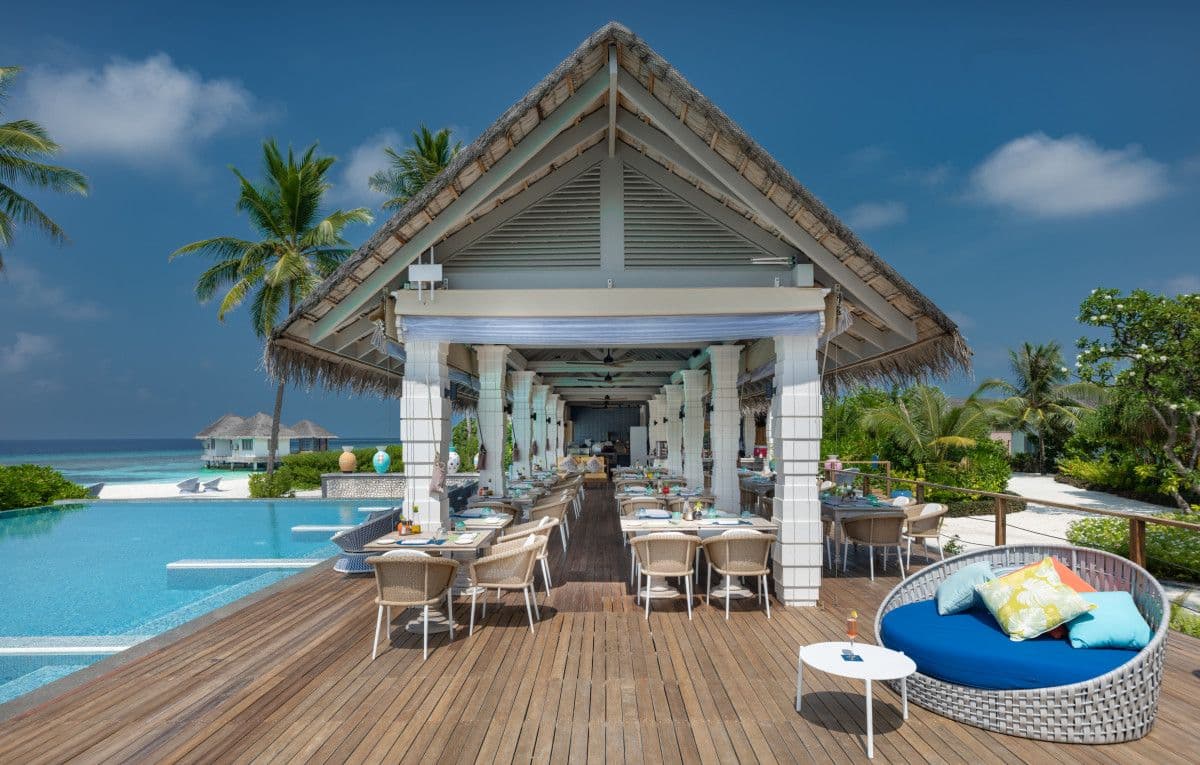
In dry season, you might spend whole days out on boat trips. In July, you'll likely spend a few afternoons at the resort bar or restaurant waiting for a shower to pass. That's exactly when food and drink bills creep up, with about 27% in taxes and service charges added to every cocktail.
An all-inclusive or full-board plan (some resorts call it "dine-around") locks that cost in. It usually works out cheaper and means you don't have to think about the bill every time you order a coffee.
If you're comparing a Maldives tour package against booking the resort yourself, read the fine print line by line. Check whether the package price includes the 17% TGST, the service charge, the Green Tax and the seaplane or speedboat transfer. Two packages that look $500 (about ₹47,500) apart can end up costing the same once those are added.
Atoll-by-Atoll Guide: Where to Stay in July
The atoll you pick matters more in July than in most months, because a few of them have their best marine life season right now. If you're building a list of places to visit in Maldives this month, start with the three below.
Baa Atoll: The Manta Rays of Hanifaru Bay
Baa Atoll is a UNESCO Biosphere Reserve, and from roughly July to October it's one of the best places in the world to see manta rays feeding. When plankton gets pushed into Hanifaru Bay, dozens of mantas can gather and swim in tight circles to feed. Divers call it a "vortex," and it's one of the main reasons people come to Baa in July.
Hanifaru Bay is protected, and rangers enforce strict rules. Always check the latest before you go, but they've included:
A daily visitor cap (around 80 people)
A permit fee of roughly $30 to $60 (about ₹2,850 to ₹5,700)
Snorkelling only, no scuba diving
No fins inside the bay
A time limit of about 45 minutes per visit
South Ari Atoll: Whale Sharks All Year
South Ari Atoll is home to one of the few places on earth where you can see whale sharks year-round. Researchers have identified hundreds of individual whale sharks in the Maldives, many of them around South Ari, and the channels near Dhigurah are a well-known spot to find them.
Most resorts in the area run whale shark snorkel trips. On a calm morning, it's very possible to swim alongside the largest fish in the ocean.
Male and Outer Atolls: Surf Season
If you surf, July is your month. Southern swells from the Indian Ocean produce the most consistent waves of the year. Breaks like Sultans and Honkys in North Male Atoll get busy with surf charters, and Pasta Point is reserved for guests of Cinnamon Dhonveli, which means you won't be fighting a crowd for waves.
Booking a North Male Atoll resort also has a practical upside. Most are a short speedboat ride from the airport, so you can be in the water a couple of hours after landing.
Which Atoll Fits Your Trip?
Your main goal | Head to | Why |
Swimming with manta rays | Baa Atoll | Hanifaru Bay feeding season peaks July to October |
Seeing whale sharks | South Ari Atoll | Whale sharks are around all year |
Surfing | North Malé Atoll | Most consistent swells of the year |
Rest and quiet | Any atoll, ideally a resort with a sheltered lagoon | Calmer water means more swimming days |
Sun Safety on Cloudy Days
A lot of visitors get their worst sunburn on an overcast day, because the clouds make the sun feel weaker than it is.
UV Through the Clouds
The Maldives sits close to the equator, and the UV index regularly hits Extreme (11+) all year round. Up to 80% of UV rays can get through cloud cover, so an overcast July afternoon can still burn you badly.
And the "base tan" idea? It offers protection roughly equal to SPF 2 to 4, which is next to nothing.
How to Protect Yourself
Use a broad-spectrum, reef-safe sunscreen of SPF 30 to 50+. Avoid ones with oxybenzone, which damages coral.
Reapply every two hours and after every swim.
Wear a UPF 50+ rash guard for snorkelling. Your back burns first when you're face-down in the water.
Pack polarised sunglasses to cut the glare off the water.
Conclusion:
The weather in July is less predictable than in peak season. You'll probably get a few grey afternoons and some rain on your deck. You'll also get the same resorts and warm water as in January, mantas in Baa and whale sharks in South Ari, and a much smaller bill.
Book July if you want five-star luxury at 30% to 50% off, you're keen to swim with mantas or whale sharks, you surf, or a short afternoon shower doesn't bother you.
Skip July if you need guaranteed clear skies every day, or rescheduling plans at short notice would ruin the trip for you.
If you're in the first group, head out early each day, pick an all-inclusive plan, and enjoy having more of the island to yourself.
Frequently Asked Questions
Is it safe to swim in the Maldives in July?
Yes. The sea stays around 28°C to 29°C all year. Just check with the resort's water sports team about currents after a squall, especially before swimming off an overwater villa deck.
Do resorts close facilities in the off-season?
No. Restaurants, spas, dive centres and water sports keep running as normal in July.
What happens if my excursion gets rained out?
Resorts watch the weather closely and will reschedule trips to the next good window, often the following morning. Booking excursions early in your stay gives you more room to move them.
How many days does it rain in July?
Usually around 12 to 14 days in the month see some rain. Most of it falls in short bursts of 30 to 90 minutes rather than all day.
Is July a good time to see manta rays?
It's one of the best. Hanifaru Bay in Baa Atoll has its main manta feeding season from about July to October.
Planning this trip?
Tell us what you have in mind and a Many2Go consultant will get back to you with a tailored plan for Maldives.