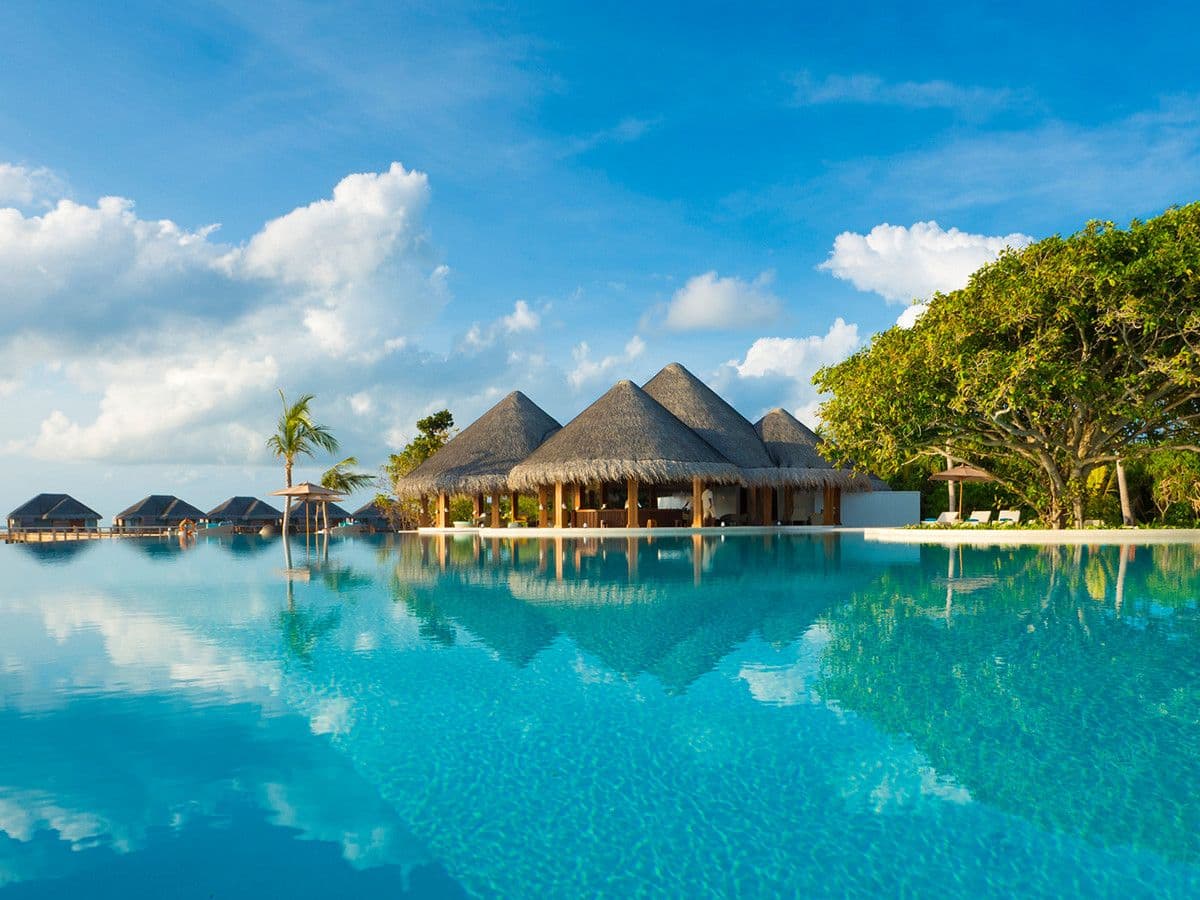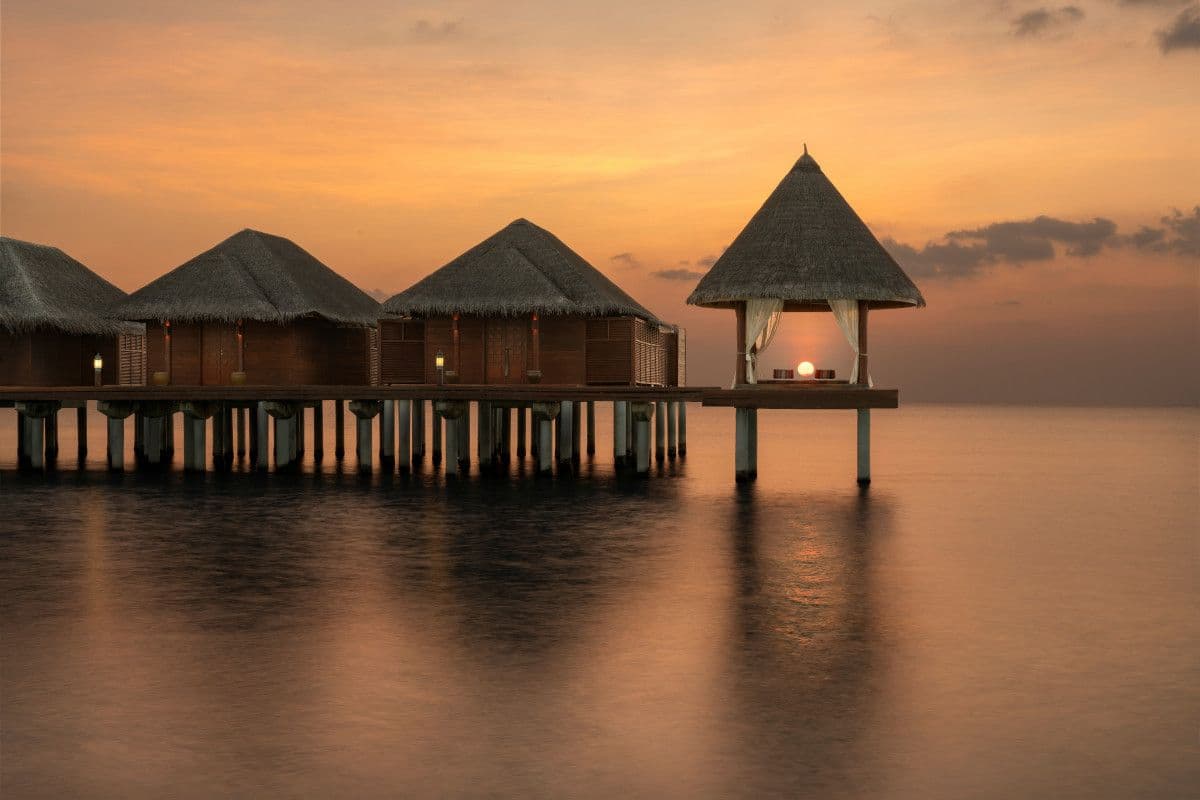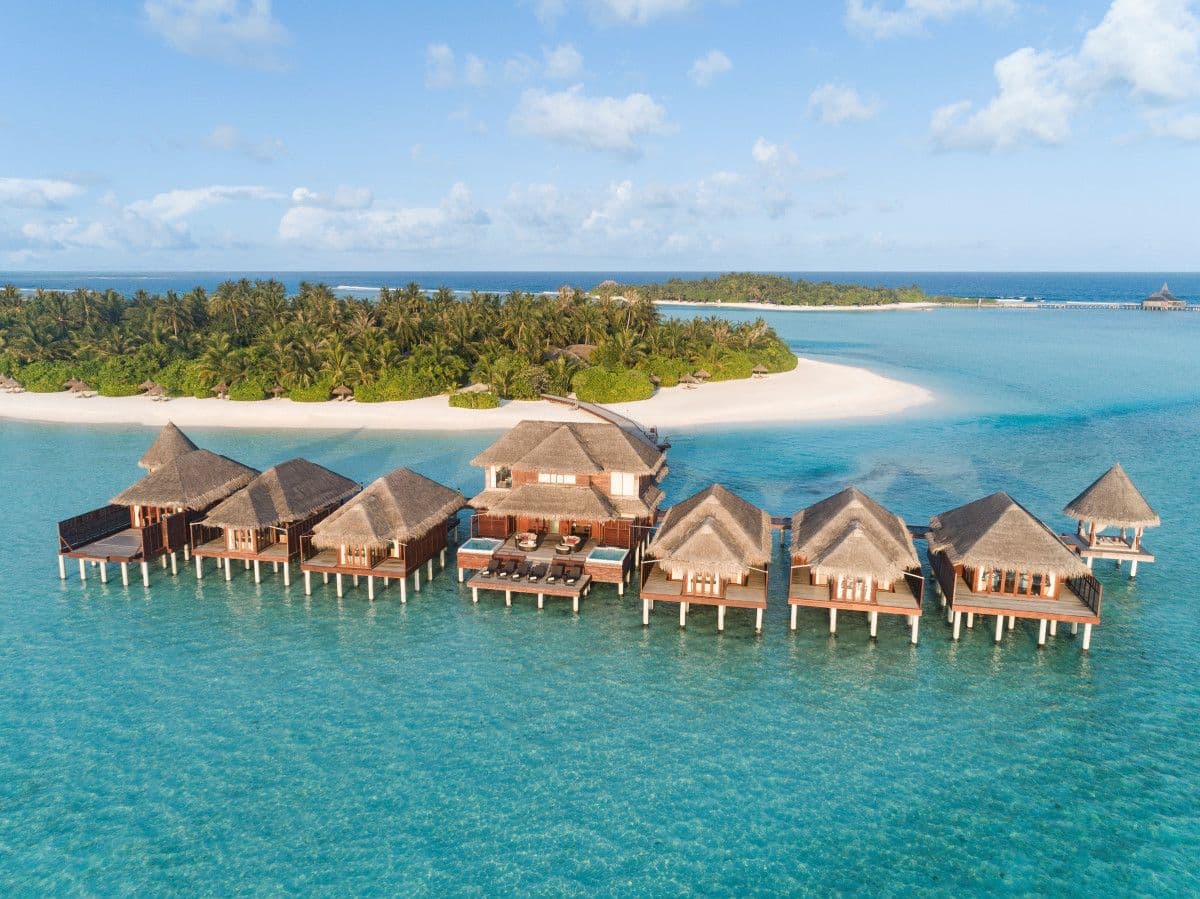
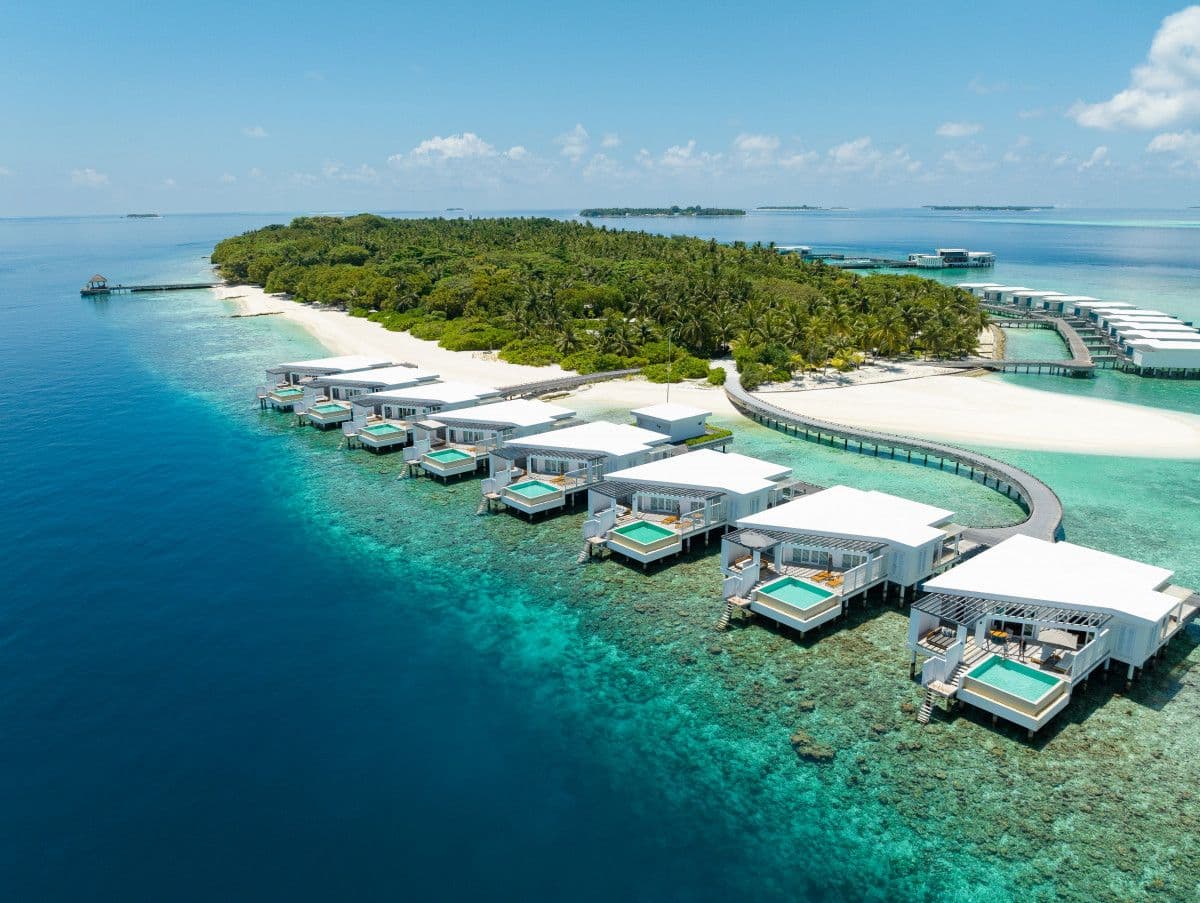
Picture the overwater villa you’ve been eyeing for January at close to half the price, in warmer water, with fewer people at breakfast, and rain that usually clears before your cocktail gets warm. That’s May in the Maldives.
Yes. May marks the start of the Maldives low season and the southwest monsoon, but the weather is far better than most people expect. Daytime temperatures stay around 30°C to 31°C, the sea sits at 28°C to 29°C, and you still get about 7 hours of sunshine a day. Rain usually comes as short afternoon showers lasting 30 to 90 minutes. Meanwhile, five-star resort rates drop by 25% to 50% compared to peak season (December to April), which makes May one of the best-value months to book an overwater villa.
We plan Maldives holidays all year, and when a May trip goes badly, rain is rarely the reason. The usual causes are a resort on the exposed side of its atoll, a seaplane transfer booked too close to a flight home, or a snorkelling trip scheduled at 2 PM just as the clouds build. Below, we cover the weather, how we pick resorts and transfers, when to book, which meal plan to choose and when the manta rays arrive.
The quick takeaway
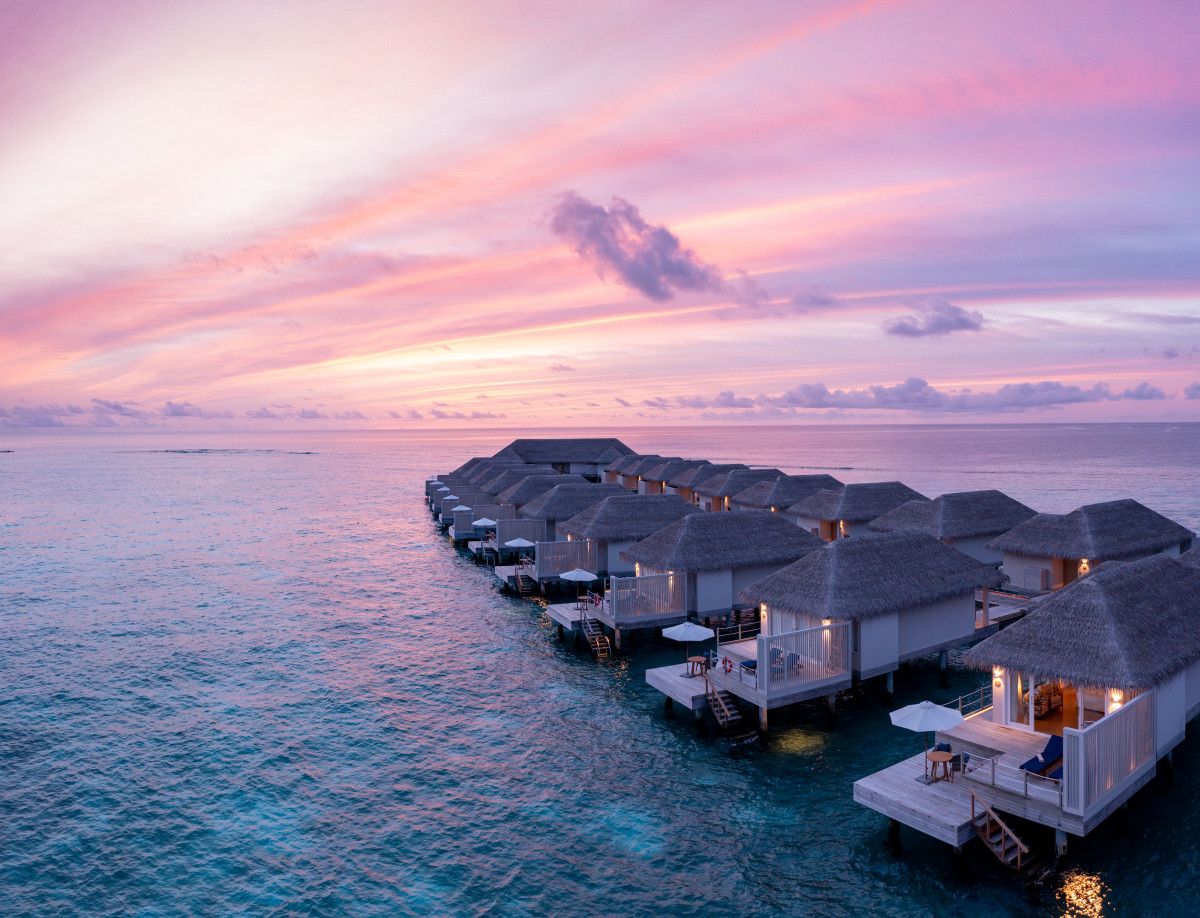
Yes, the Maldives is worth visiting in May, as long as an occasional afternoon shower doesn’t bother you.
Expect warm, humid days with sun most mornings and quick bursts of rain later in the day.
If your flight connections are tight, we recommend a resort in North or South Male Atoll with a speedboat transfer.
We shortlist resorts on the sheltered side of their atoll, with covered dining and a good spa for rainy hours.
Book 4 to 9 months ahead for the best early-bird deals, or 2 to 3 months out for last-minute offers.
Plan water activities for the morning and keep afternoons for the spa.
If manta rays are on your list, we’ll point you towards Baa Atoll, where the season starts in May.
May weather in the Maldives: what the monsoon actually looks like
Tropical showers vs all-day downpours
The southwest monsoon is called Hulhangu locally, and it usually starts building in May. Many of our clients are from India, and “monsoon” makes them think of flooded roads back home. The Maldives works differently.
Most rain here comes as short, heavy showers lasting 30 to 90 minutes. Clouds stack up over the ocean, the wind picks up, it pours for a while, and then it stops. You might get one or two fully grey days during a week-long stay, but our travellers rarely report more than that.
Once the rain passes, the sky often looks clearer than before, and the lagoon colours stand out in the sharper light. Some of the best holiday photos our clients send back are from May, with big storm clouds behind the villas.
Temperature, sunshine and sea conditions
In May, you can expect:
Daytime highs of around 30°C to 31°C
Night-time lows of around 26°C to 27°C
Sea temperatures of 28°C to 29°C, warm enough to stay in for an hour without getting cold
Roughly 7 hours of sunshine a day, even with 7 to 10 rainy days in the month
It’s humid, so you’ll feel sticky by mid-afternoon. A quick swim sorts that out.
Microclimates and atoll differences
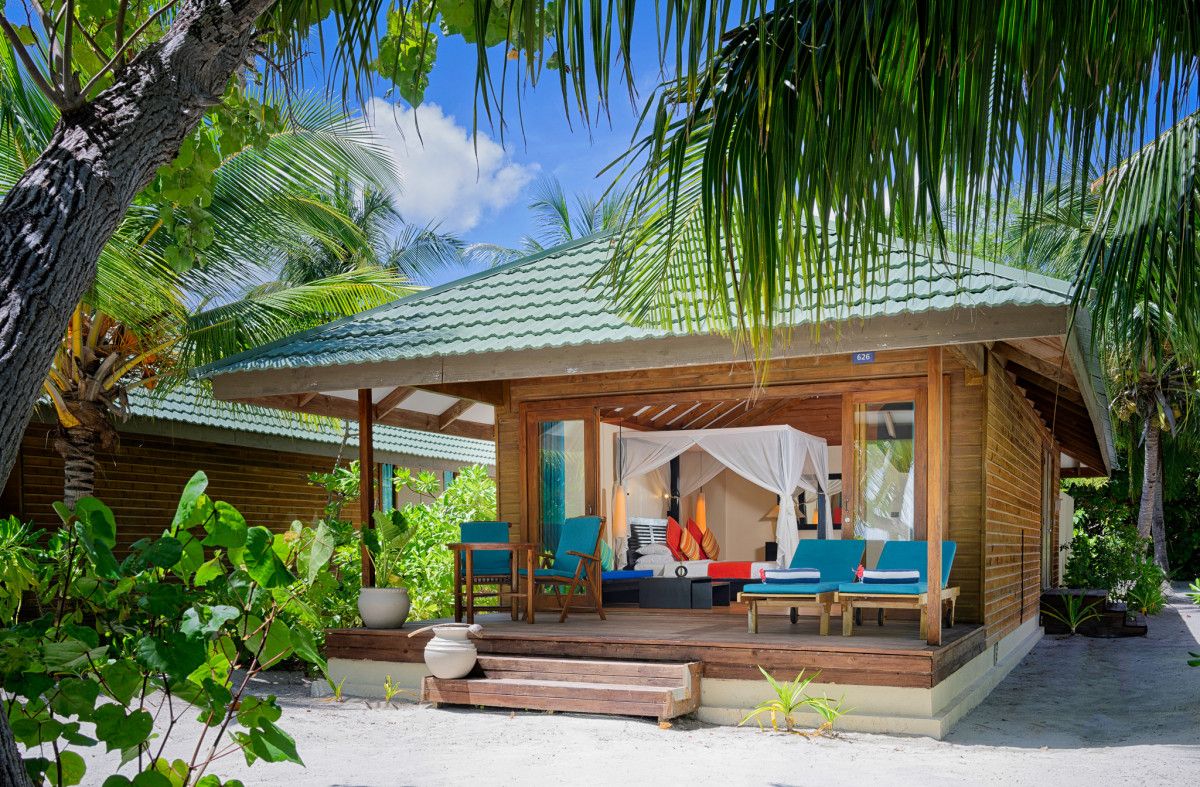
The Maldives stretches over 800 km from north to south, so the weather isn’t the same everywhere on a given day. One atoll can get a heavy shower while another 100 km away stays dry.
The southern atolls sit closer to the equator and tend to have rain spread more evenly through the year. The northern and central atolls feel the switch into the southwest monsoon more clearly. In May, wind and swell come mostly from the southwest and west, so beaches on the western side of an island or atoll get choppier water than those facing east. We check this first when shortlisting resorts for May.
May vs January at a glance
May (low season) | January (peak season) | |
Average high | ~31°C | ~30°C |
Monthly rainfall | ~200 to 230 mm | ~75 to 110 mm |
Sunshine hours per day | ~7 | ~8 to 9 |
Water temperature | 28°C to 29°C | 27°C to 28°C |
Entry overwater villa (example) | ~₹40,000 to ₹53,000/night ($450 to $600) | ~₹70,000 to ₹97,000/night ($800 to $1,100) |
Villa prices are illustrative ranges for a mid-tier five-star resort. Actual rates vary by property.
May gets more rain on paper, but in practice you lose maybe one to two hours of sunshine a day compared to January. If you’re judging the best time to visit Maldives on value alone, May beats almost every other month, and most of our clients are happy with that trade.
How we pick resorts and transfers for May
Few online guides cover this, yet in our experience it decides how a May trip goes more than the weather does.
Speedboat vs seaplane: dealing with weather delays
Seaplanes in the Maldives fly under visual flight rules, which means pilots need to see where they’re flying. They only operate in daylight, and when a storm cell sits over the route, flights wait until it clears. Usually that’s an hour or two. Now and then, it means missing the last flight of the day and spending a night near Malé.
Speedboats keep running in most conditions. The ride can get bumpy, but you’ll get there.
So when a client lands late in the afternoon or has a tight connection on the way home, we steer them towards North Male or South Male Atoll, where speedboat transfers take 15 to 45 minutes. Seaplane resorts are still a good choice in May. We just build extra buffer time into the itinerary on both ends, and we never book a client’s international flight home for the same morning they leave a seaplane resort.
Resort features we look for in low season
Since the swell comes from the southwest in May, resorts on the eastern side of an atoll, or inside a protected lagoon, usually have calmer beaches and better snorkelling. We check which way each resort’s beach and house reef face, and we read feedback from guests who stayed in May and June.
We also look for places to wait out an hour of rain in comfort:
Covered walkways between villas and restaurants, so nobody runs through the rain to dinner
At least one restaurant with glass walls or a solid roof
A kids’ club with indoor space, for families
A proper spa, ideally overwater, where the rain sounds lovely from inside a treatment room
A resort with only open-air dining can feel awkward when it pours at 7 PM, so we factor that in.
Choose the entry villa over the big suite
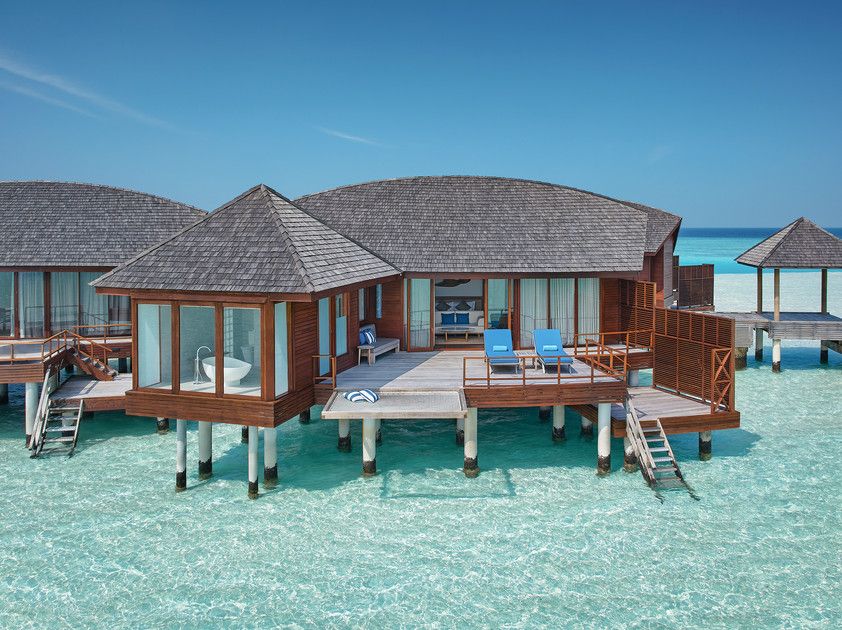
An entry-level overwater villa or beach villa gets you the same reef, restaurants, spa and pools as the two-bedroom suite. The extra money in the bigger categories mostly pays for space and a private pool.
When we put together a Maldives honeymoon package, this is usually where we find the first savings. For a couple who’ll spend their days snorkelling and at the spa, a standard overwater villa is plenty. Sunset-facing villas also tend to cost a bit more than sunrise ones, so we ask couples whether they’ll actually be up for sunrise. The answer saves some of them a good amount.
All-inclusive vs half board
Food and drink in the Maldives is expensive. A cocktail can cost ₹1,750 to ₹2,200 ($20 to $25) before the 10% service charge and 17% GST are added, so the meal plan affects the final bill more than most people expect.
All-inclusive makes sense if you’ll each have three or more alcoholic drinks a day, or you’re travelling with kids who snack all day. It usually pays for itself. Half board (breakfast and dinner) works better if you don’t drink much, want to try the resort’s specialty restaurants, or will be out on excursions at lunchtime.
To check, take the daily per-person difference between half board and all-inclusive and divide it by the price of an average drink with taxes. If you’ll drink more than that number each day, all-inclusive wins.
Marine life, surfing and diving in May
Manta rays at Hanifaru Bay, Baa Atoll
Of all the places to visit in Maldives during May, Baa Atoll is the one we recommend most to snorkellers. It’s a UNESCO Biosphere Reserve, and Hanifaru Bay inside it is one of the best spots in the world to watch manta rays feed. When the southwest monsoon arrives, currents push plankton into the bay, and the mantas follow.
May is the start of the season. The biggest gatherings, sometimes over a hundred mantas at once, usually happen from around July to September, but sightings begin in May and June. Whale sharks turn up here now and then, though for better chances of swimming with one, we book travellers into a South Ari Atoll resort, since that area is known for whale shark sightings throughout the year.
Before you go to Baa, it helps to know that Hanifaru Bay is snorkelling only, with diving inside the bay not permitted. Visits are regulated, with limits on group size and time in the water. Resorts in Baa Atoll usually run trips when mantas are spotted, and we confirm this with the resort before booking.
The start of surf season
May is a good month for surfers. The southwest swells start arriving consistently, while lineups stay quieter than in the peak surf months of June to August. The main surf areas are around North and South Malé Atolls and the central atolls. We can arrange resorts with their own breaks and surf guides, or surf charter boats.
Scuba diving visibility and wetsuits
Visibility in May usually ranges from 15 to 30 metres. It can drop on the western side of atolls, where plankton clouds the water, and is often better on the eastern side. The same plankton brings in mantas and other big fish, so the trade is a fair one.
With water at 28°C to 29°C, a 3mm shorty is fine for one or two dives a day. For three or more dives a day, a 3mm full suit is better, since the chill slowly builds up over long dives.
Local island etiquette and religious holidays
The Maldives is a Muslim country, and the rules on resort islands differ from those on local islands. On resort islands, alcohol is available and normal swimwear is fine. On local islands, alcohol is not allowed, you should cover your shoulders and knees when walking around the village, and swimwear is fine only on designated “bikini beaches.”
For the next few years, Ramadan falls in February and March, so it won’t affect a May trip. If you travel during Ramadan in a future year, avoid eating or drinking in public on local islands during daylight hours.
In 2027, Eid al-Adha falls around mid-May. It’s a public holiday, so some local businesses and ferries may run reduced schedules. If you’re staying on a local island, we’ll plan around it.
Our low-season Maldives packing list: 8 must-haves
Dry bag
Waterproof phone pouch
Packable rain jacket or poncho
Reef-safe sunscreen (SPF 50)
Insect repellent
Rash guard
Light, breathable clothing that covers shoulders and knees (for local islands)
Motion sickness tablets (for bumpy boat rides)
Conclusion
We recommend May if you are:
A value seeker who wants a five-star stay without peak-season prices
A couple looking for a quieter, more private trip
A surfer after good swells and empty lineups
A diver or snorkeller keen on manta rays in Baa Atoll
Happy to sit out an hour of rain in exchange for a much lower bill
We’d suggest another month if:
You need clear blue skies every single day of your trip
You’re planning a wedding or photoshoot on one fixed date with no backup
You get badly seasick and your preferred resort is only reachable by a long boat ride
Visit in May and you’ll probably get rained on once or twice. You’ll also pay a lot less for the same villa and reef, and share them with far fewer people. For May trips, we choose sheltered resorts, keep transfers short where the timing is tight, and put snorkelling in the mornings and spa time in the afternoons.
If you’re thinking about a May trip, get in touch with our team. We’ll build a Maldives tour package around your budget, dates and travel style, and find the best low-season deals available.
Frequently asked questions
Does travel insurance cover monsoon weather delays?
It depends on the policy. Most good travel insurance plans cover delays caused by weather, such as a grounded seaplane that makes you miss a connecting flight, under “travel delay” or “missed connection” benefits. They won’t pay out because it rained and you didn’t enjoy the day. We recommend buying insurance as soon as you book, and reading the policy wording before you pay.
Are mosquitoes worse in May?
There are a few more mosquitoes in the wetter months, mainly in the evenings and around plants and standing water. Most resorts fog regularly and keep things under control. Local islands can be a bit worse. A good repellent and light, long clothing in the evening are usually all you need.
Are local ferries reliable in May if I’m staying on a guesthouse island?
Public ferries generally run, but they can be delayed or cancelled when the sea gets rough. They also run on limited schedules, and some routes don’t operate on Fridays. For island-hopping trips, we add a buffer day before the international flight and arrange speedboat transfers as a backup. They cost more but are faster and more flexible.
What happens if my excursion gets cancelled because of the weather?
Most resorts will either move the excursion to another day or give a full refund. When we plan your trip, we schedule the important excursions, like a manta trip or a sandbank picnic, early in your stay so there’s time to reschedule if the weather doesn’t cooperate.
Planning this trip?
Tell us what you have in mind and a Many2Go consultant will get back to you with a tailored plan for Maldives.